24 hours
Down from 100 hours
100k+
Applications managed
0
Rework rate
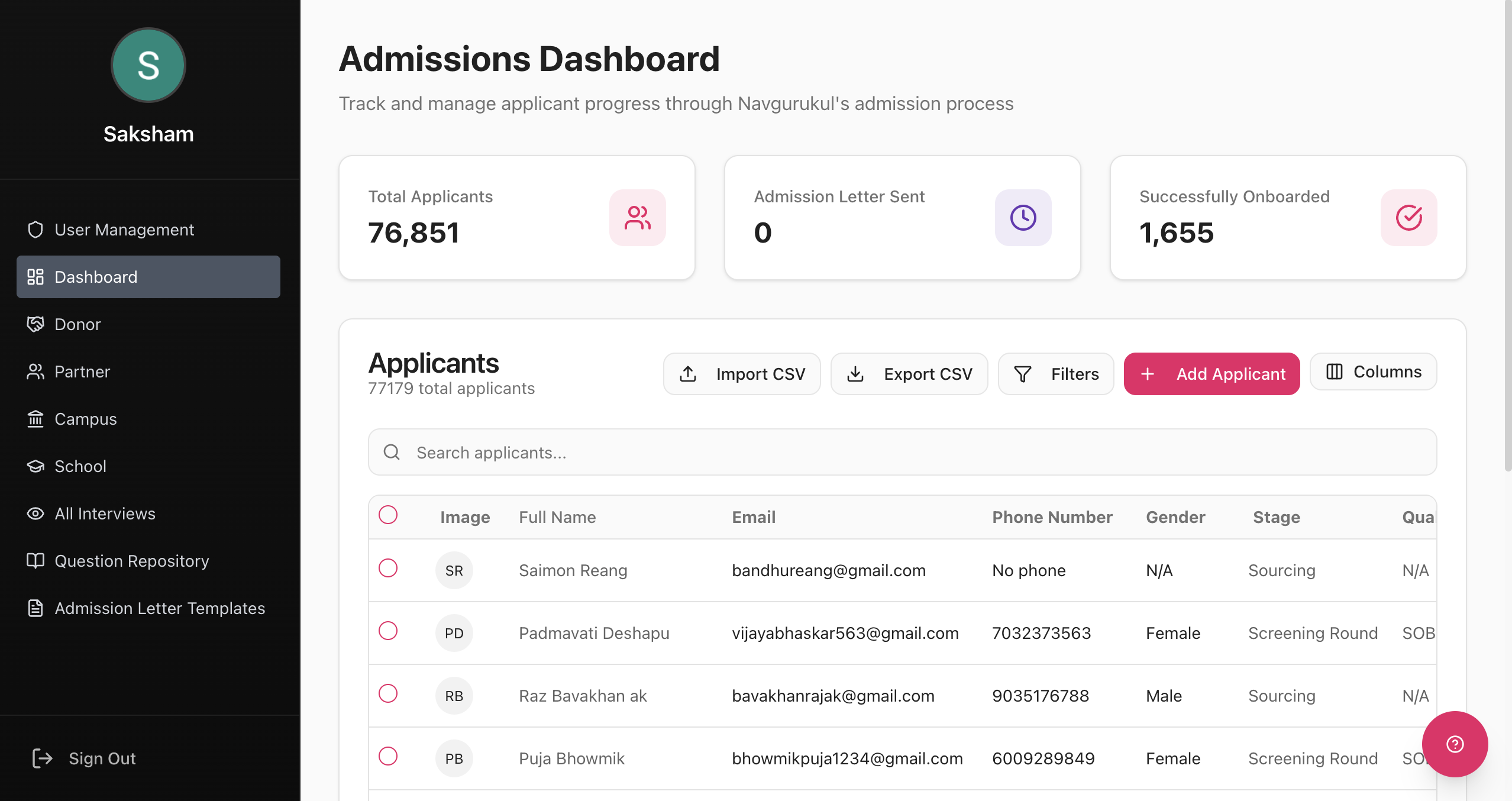
The dashboard — a single view of every applicant's stage, status, and owner
Context
NavGurukul processes admissions for tens of thousands of applicants across multiple campuses, languages, and entry pathways. Admissions is the first system a prospective learner touches.
The problem
The process ran on spreadsheets. A single application took 100 hours to move through screening, interview scheduling, and an offer decision, with the steps coordinated manually across multiple people and files.
Roughly one in seven applications had to be redone because of a manual error — a wrong status, a missed update, a record that fell out of sync with another sheet.
The deeper problem was not the spreadsheets themselves. It was that the workflow had outgrown the tool. Multilingual screening tests, parent conversation holds before an offer could be sent, and waitlist management for social impact admissions are not edge cases — they are the core of how admissions actually works at NavGurukul.
Decision and approach
Build vs buy
A generic CRM was evaluated and ruled out — not because it lacked features, but because adopting one would have meant reshaping the admissions workflow to fit the software. Parent conversation holds, multilingual screening, and waitlist logic for social impact admissions are specific enough that forcing them into an off the shelf tool would have meant working around it as much as with it.
What to build first
Rather than attempt a full replacement in one pass, the system was scoped around the actual lifecycle — screening, interview scheduling, decisioning, and onboarding — treating each as a distinct stage with its own state. This made it possible to define exactly where rework was happening and design validation directly into those points.
Stack
Built on Lovable, Supabase, and Cursor — chosen to move from decision to working system quickly without sacrificing the data structure a process at this volume needs. Supabase provided the relational structure to track an applicant reliably across stages, owners, and status changes.
Build & proof
Three parts of the system show what changed in practice.
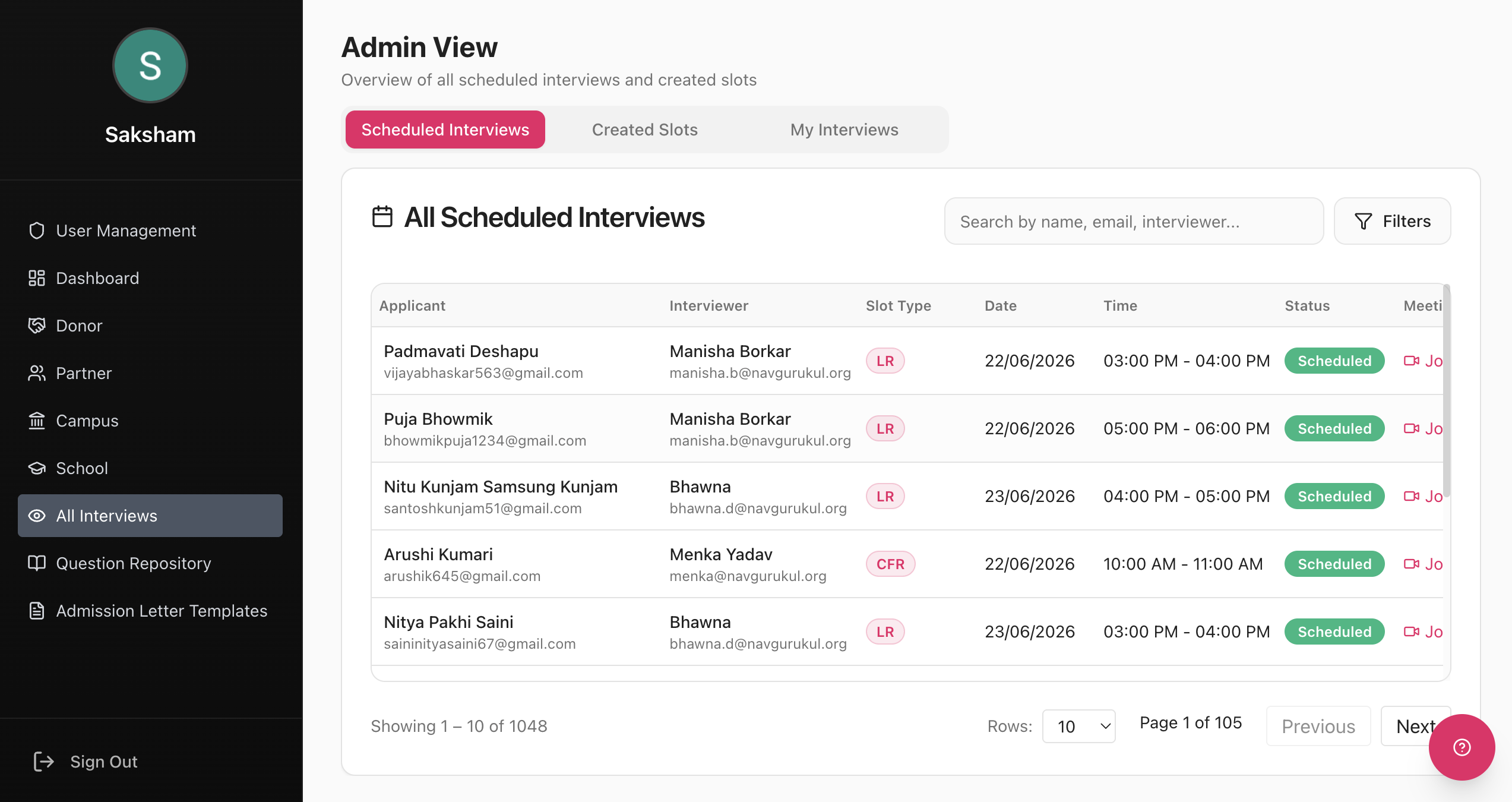
Interview scheduling
Screening, scheduling, and outcome are tracked as one continuous record per applicant, so an interview decision updates the applicant's status automatically rather than waiting for someone to carry that update into a different file.
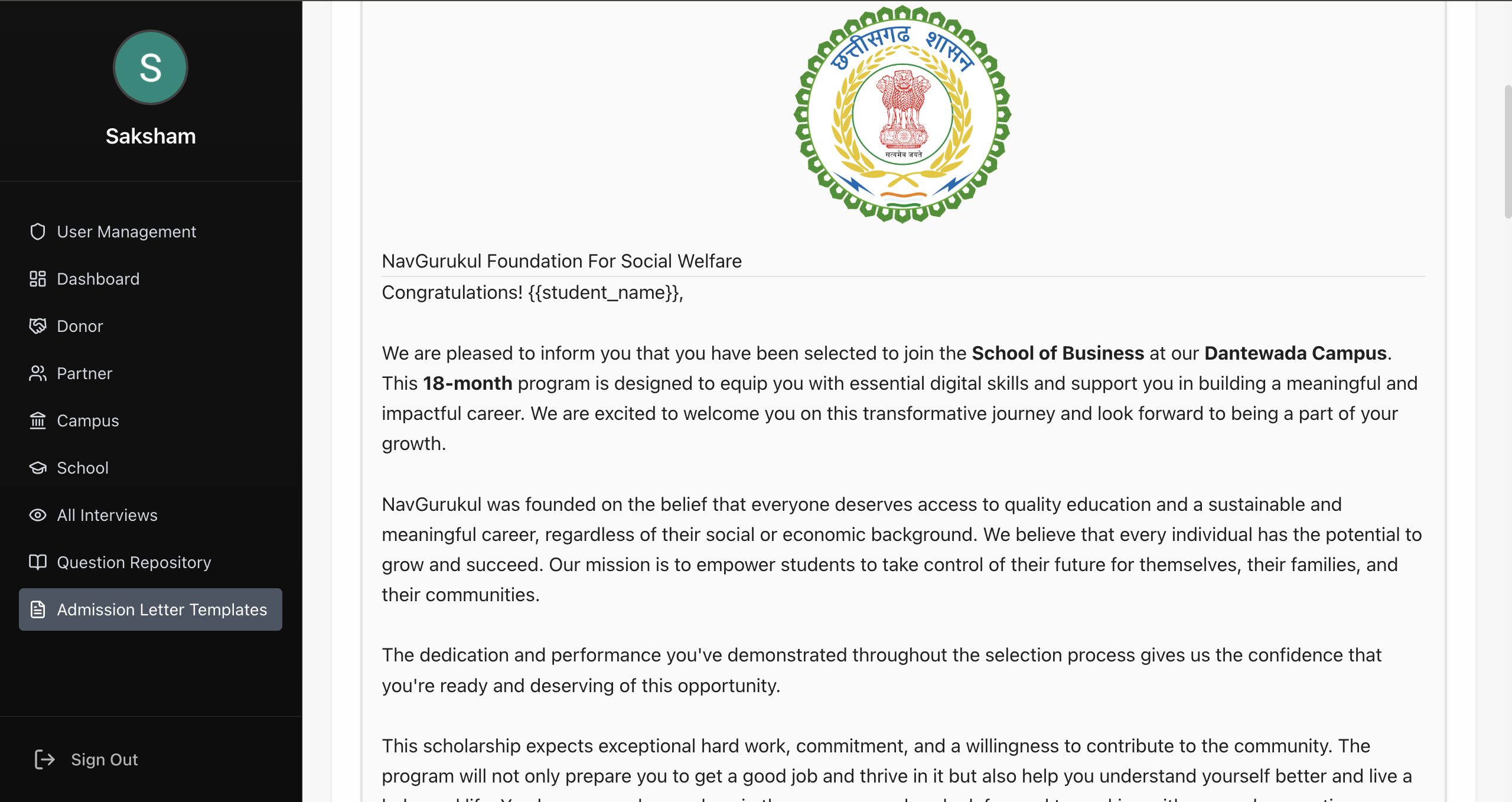
Offer letter
Generated directly from the applicant's record once a decision is made, removing a manual drafting step that was a common source of rework in the old process.
What it changed
Together these stages form a system that manages the complete lifecycle end to end, with validation built into each transition so a record cannot move forward in an inconsistent state.
“Admissions stopped being a process held together by people manually checking spreadsheets against each other, and became a system where the workflow itself enforces consistency.”
The 100 hours an applicant used to wait on uncertain status is now 24 hours, and that difference is measured in qualified applicants who stay in the process rather than dropping out of it.
Admissions volume grew without adding headcount. The coordination work that previously required people to manually check records across multiple files is now handled by the system itself. The team redirected that time toward conversations with applicants rather than administration of their data.